Why simple changes stop being simple
Small product changes often take too long on mature digital platforms.
A founder asks for a better booking step. A marketplace team wants cleaner filters. Marketing needs a new page template. A Head of Digital wants the mobile flow fixed before the next campaign.
The request looks small because the visible change is small.
Then the team opens the product and finds the real work.
The booking step depends on partner data that is incomplete in some cases. The filters use old listing categories. The mobile component appears in several other flows. The page template is tied to CMS rules that marketing has learned to work around. Support has a manual process because the product does not explain one condition clearly enough.
The team is no longer changing one screen. It is trying to understand how the platform works.
For a young product, that may be quick. For a platform that has been live for years, it can take longer than the design work itself.
The old logic is still inside the product
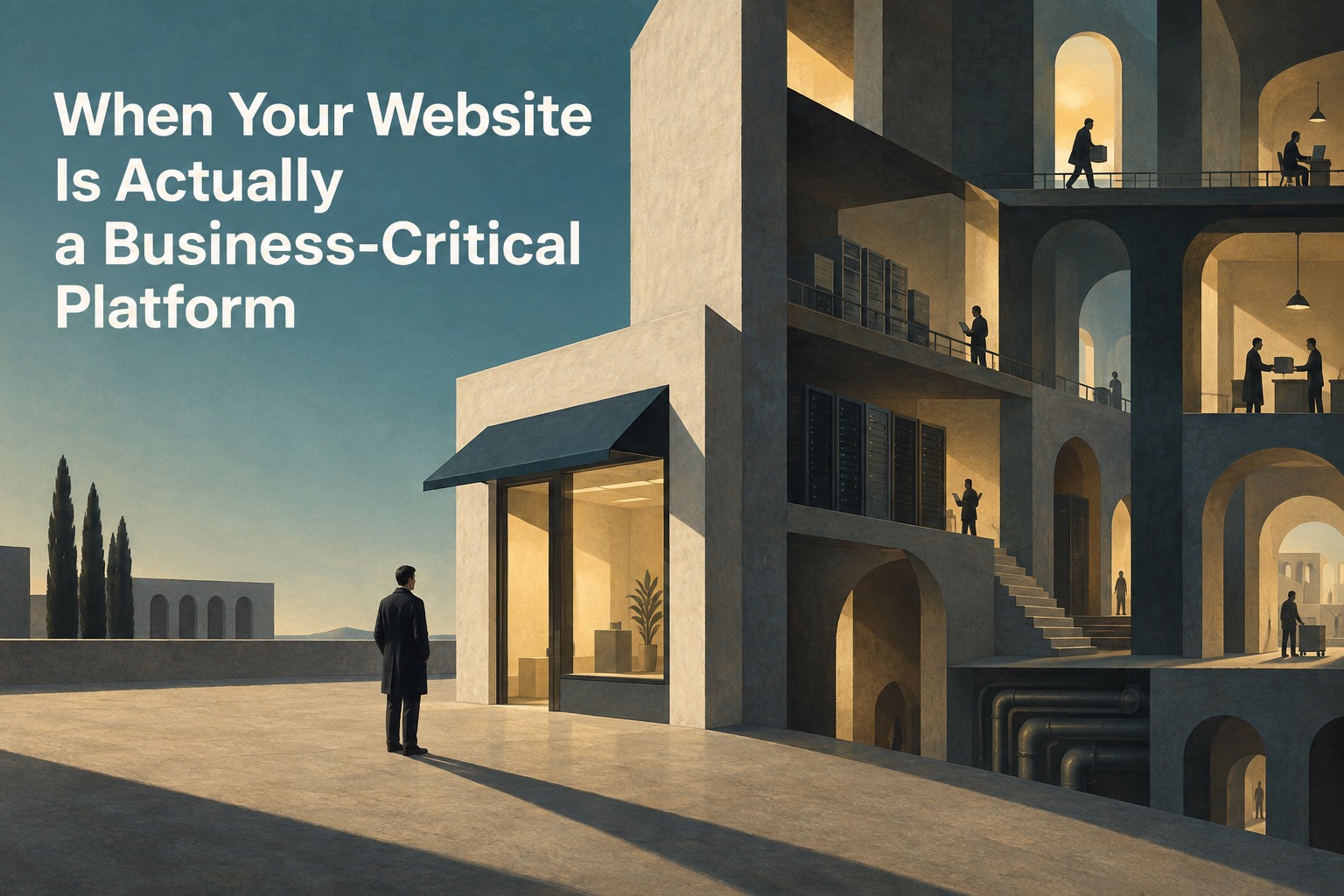
Mature platforms carry business knowledge in small places.
A label may exist because customers misunderstood a booking rule. A required field may feed an internal report. A filter may match how suppliers describe inventory. A strange extra step may prevent support from dealing with a common exception.
Some of that logic is still useful. Some of it is old. Some of it made sense three versions of the business ago.
The hard part is knowing which is which before the team changes it.
That is why a simple request quickly becomes a list of questions:
- Who depends on this field?
- What happens when the data is missing?
- Which partner or internal team uses this step?
- Is this rule still needed?
- Does support handle an exception that the product hides?
- Which other pages reuse this component?
These questions are not a sign that the team is overcomplicating the work. They are normal questions inside a mature platform. The problem is that they often appear too late, after the business already expected a quick release.
The delay usually comes from missing context
Many teams describe this as a development problem.
The code is old. The frontend is difficult. The CMS is limiting. Developers are overloaded.
Those things may be true. But slow change often comes from a different source: the team does not have a clear map of the platform as it works today.
A sitemap can show the pages. A technical architecture diagram can show systems and dependencies. A useful platform map needs one more layer: how the customer journey, business rules, content model, data, internal workflow, and manual workarounds affect each other.
Without that map, every change starts with rediscovery.
A designer asks why the flow behaves a certain way. A developer remembers an old constraint. Support explains what customers keep asking about. Marketing explains why a page is maintained manually. Leadership has to decide whether the issue is worth fixing now.
All of this is useful work. It only feels slow because it happens inside a task that was supposed to be simple.
Developers start filling the product gaps
When product logic is not clear before development, developers make decisions during implementation.
A Figma screen arrives without all states. The requirement does not cover an edge case. A third-party integration returns incomplete data. A booking rule works differently for one partner. A marketplace listing can be missing important details.
Someone still has to ship the feature.
So the developer decides what should happen. Sometimes the decision is good. Sometimes it is just the least risky option available at that moment. Either way, it becomes part of the product.
After a few years, the platform contains many decisions like this. They are not documented as product decisions. They live in code, components, templates, CMS fields, and people's memory.
The next change has to work around them.
This is why a design system alone rarely solves the problem. A design system can organize components. It cannot explain why a booking flow has five exceptions, why a marketplace listing needs a certain field, or why the content team maintains one section manually.
The logic has to be made visible first.
Manual workarounds are a useful warning sign
Support and operations often know where the platform is weakest.
Support answers the same booking question every week. Sales helps customers compare options because the product does not make the difference clear. Operations checks submissions by hand. Marketing asks development to change content that should be editable.
Each workaround can look small. Together, they show where the platform no longer matches the business.
This cost is easy to miss because it is spread across people and time. It appears as extra calls, repeated explanations, internal messages, delayed releases, and small checks that everyone has accepted as normal.
For an established business, this can matter more than an old visual style. A dated interface is easy to see. A product that quietly asks the team to compensate every week is harder to measure.
Redesign should start with one important flow
At some point, the platform starts to look and feel behind the business. Competitors look cleaner. Mobile feels worse than it should. Customers need help with basic tasks. The team wants a redesign because the current product is full of old decisions.
A redesign may be the right move. But the useful first step is usually smaller and more practical.
Pick one important flow and map it properly.
Choose a flow close to revenue, trust, or internal workload. For example:
- booking
- inquiry
- bidding
- search and filtering
- listing submission
- account setup
- content publishing
Then answer a few plain questions.
Who uses this flow? What are they trying to do? Which data and integrations does it depend on? Where do users hesitate or ask for help? Which internal team compensates when the product is unclear? Which rules still protect the business? Which rules are just old workarounds?
This gives the redesign a better starting point. The team can see what should be simplified, what should be preserved, and where the real constraint is technical rather than UX.
What this looks like in different platforms
On a booking platform, the problem may sit between discovery, availability, pricing, partner rules, checkout, and post-booking support. The user only sees one flow. The team has to manage all the logic behind it. This is the kind of work we handled in the Explorely case study, where discovery, booking, and trip planning had to become one connected product experience.
On a marketplace or auction platform, the problem may sit in search, filters, listing quality, trust signals, mobile browsing, and the path from comparison to inquiry or bidding. In the bidadoo case study, the work was about making the heavy-equipment buying path clearer before users moved into the eBay bidding flow.
On an information or hospitality platform, the problem may sit in taxonomy, editorial workflows, contributor profiles, search visibility, content authority, and how different audiences move through the site. The HospitalityNet case study is a good example of this kind of mature industry platform work.
These are different businesses, but the pattern is similar. The platform has become part of how the company operates. Changing the interface means touching more than the interface.
The goal is to make change less expensive
A mature platform will never be as easy to change as a new product. It has customers, revenue, integrations, content, internal habits, and history. Some complexity belongs there.
The useful goal is to reduce the confusion that the business pays for every time something changes.
Customers should understand the next step without calling support. Marketing should be able to update important content without asking engineering to patch a page. Developers should get flows, states, and edge cases before implementation. Leadership should be able to see which parts need UX work, which need a better content model, and which may require deeper technical modernization.
This is why Equal starts mature platform work with a Clarity Sprint as part of Digital Platform Modernization.
The point is to understand the platform before redesigning it. We map the business-critical flows, rules, workarounds, user needs, and implementation constraints. Then the redesign can focus on the parts of the product that are actually making change harder.
If small changes keep taking months, start with one important flow. Map what really happens today. Find what the platform is protecting. Find what it is making harder than it needs to be.
That is usually a better first move than redesigning screens in isolation or planning a rebuild before the problem is clear.
If your platform is valuable but increasingly hard to change, Equal can help clarify what needs to change before you redesign.
Explore Digital Platform Modernization.

Let’s create something greate together
.svg)