Automotive operations
An Australian car service provider needed a faster way for mechanics and managers to handle repair jobs, parts and workshop paperwork. Equal designed a tablet workflow that cut a client-reported parts-ordering task to 30 seconds and saved around three hours of staff time each day.
The end client is an Australian car service provider with more than 20 years in the industry. It serviced over 30,000 vehicles across a five-year period and built its reputation on reliable, high-quality work. Neorise, its long-term product partner, asked Equal to design the workshop app.
Managers and mechanics were handling several jobs at once while assisting customers. The workshop had no shared inventory view, and job cards and invoices moved through manual steps. The client reported that ordering a part could take seven minutes. The delays accumulated across the day and made it harder to see what was in stock or who was responsible for the next action.
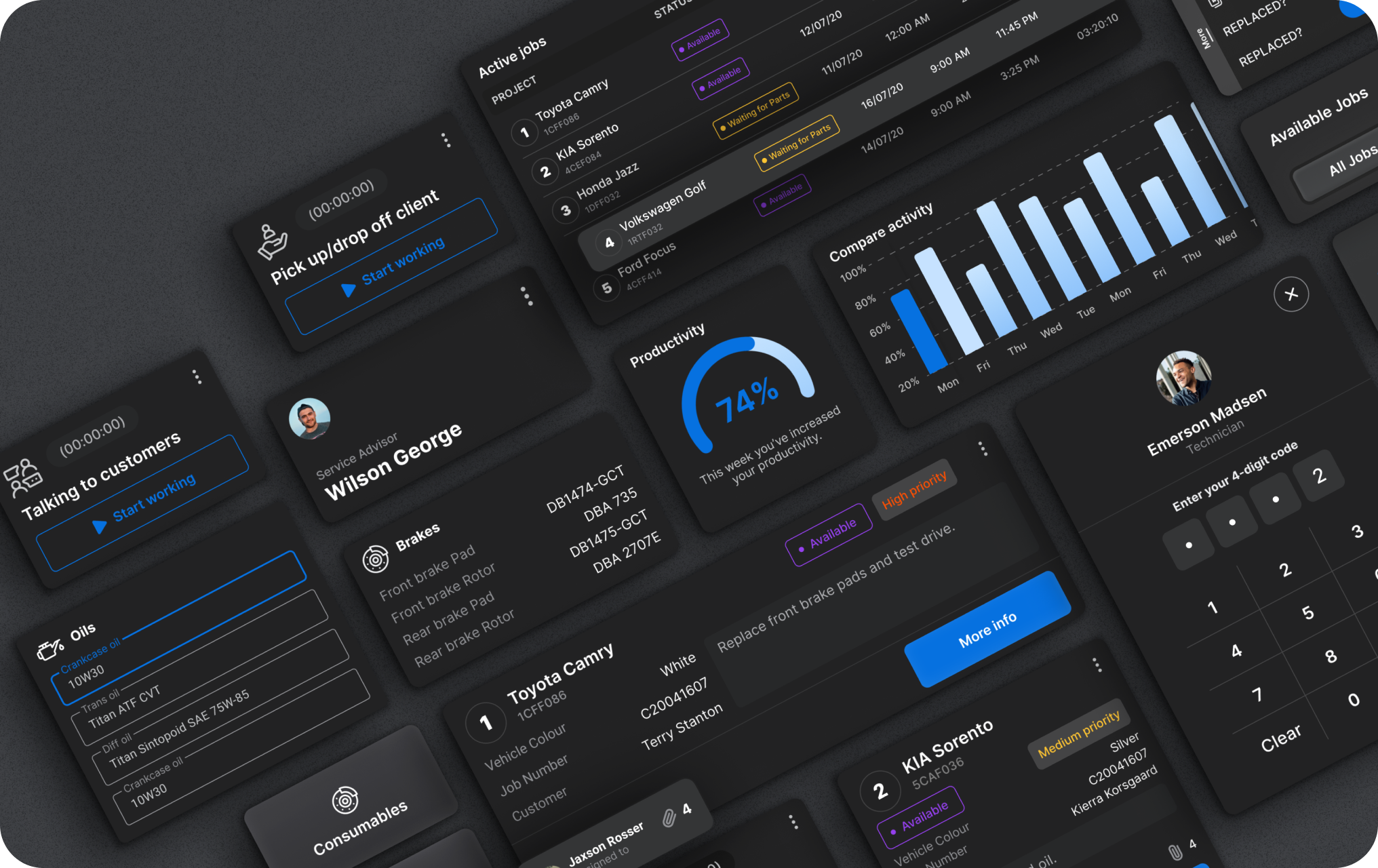
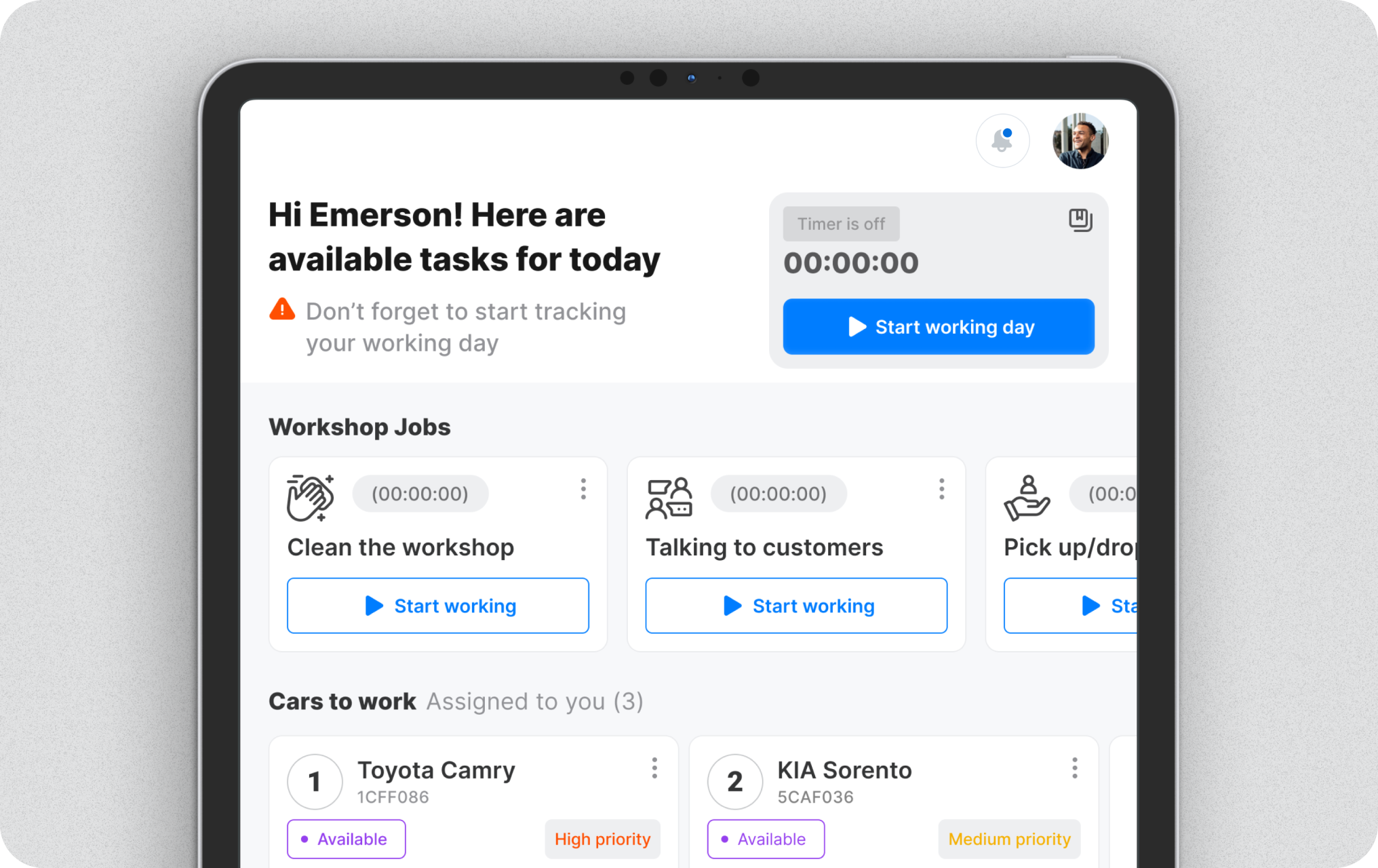
Mechanics see available and assigned jobs with vehicle details and instructions. Managers can add vehicles, assign work and onboard mechanics.
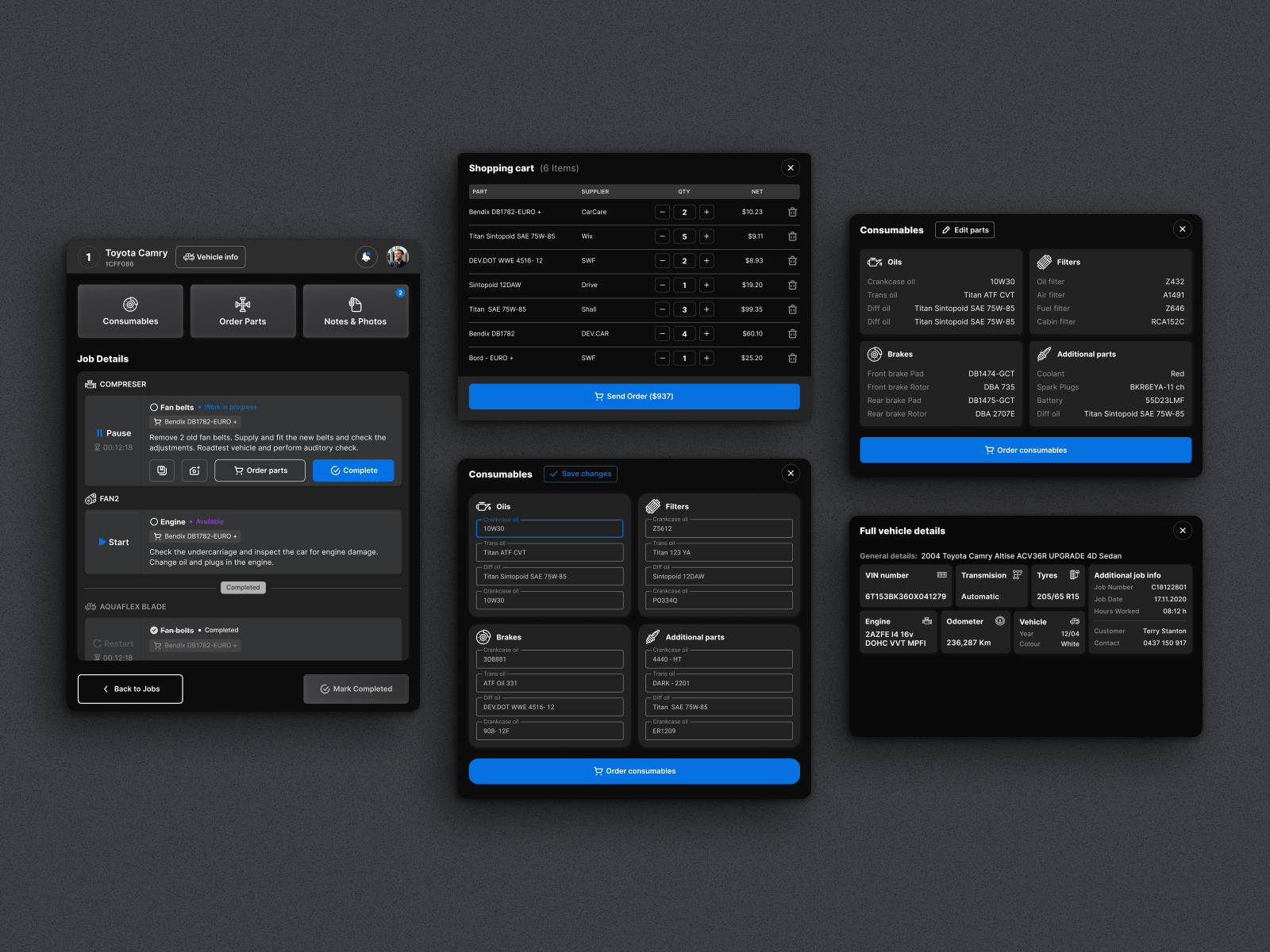
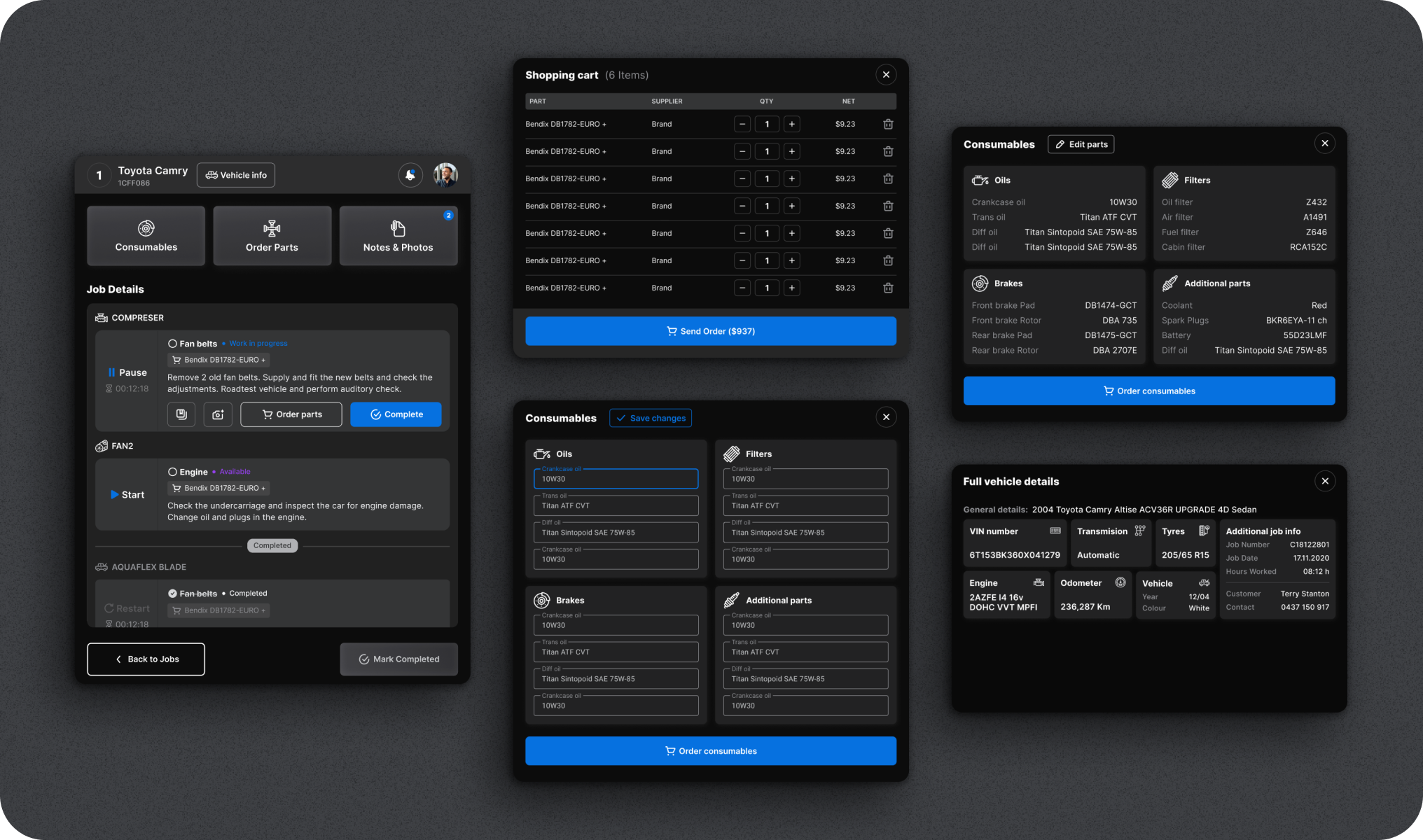
Large controls and short paths make it easier to take a task, follow the checklist and mark work complete without leaving the workshop floor.

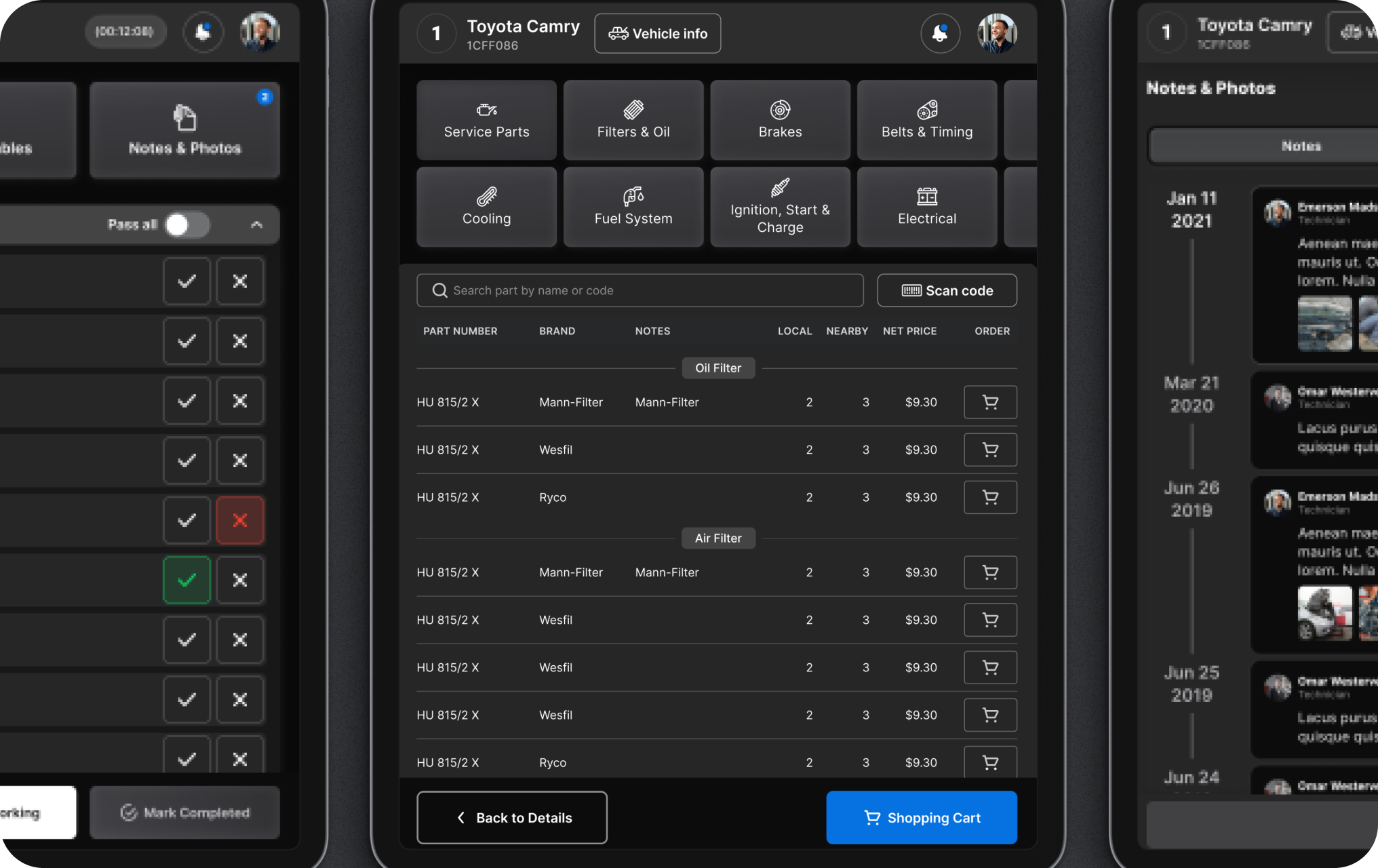
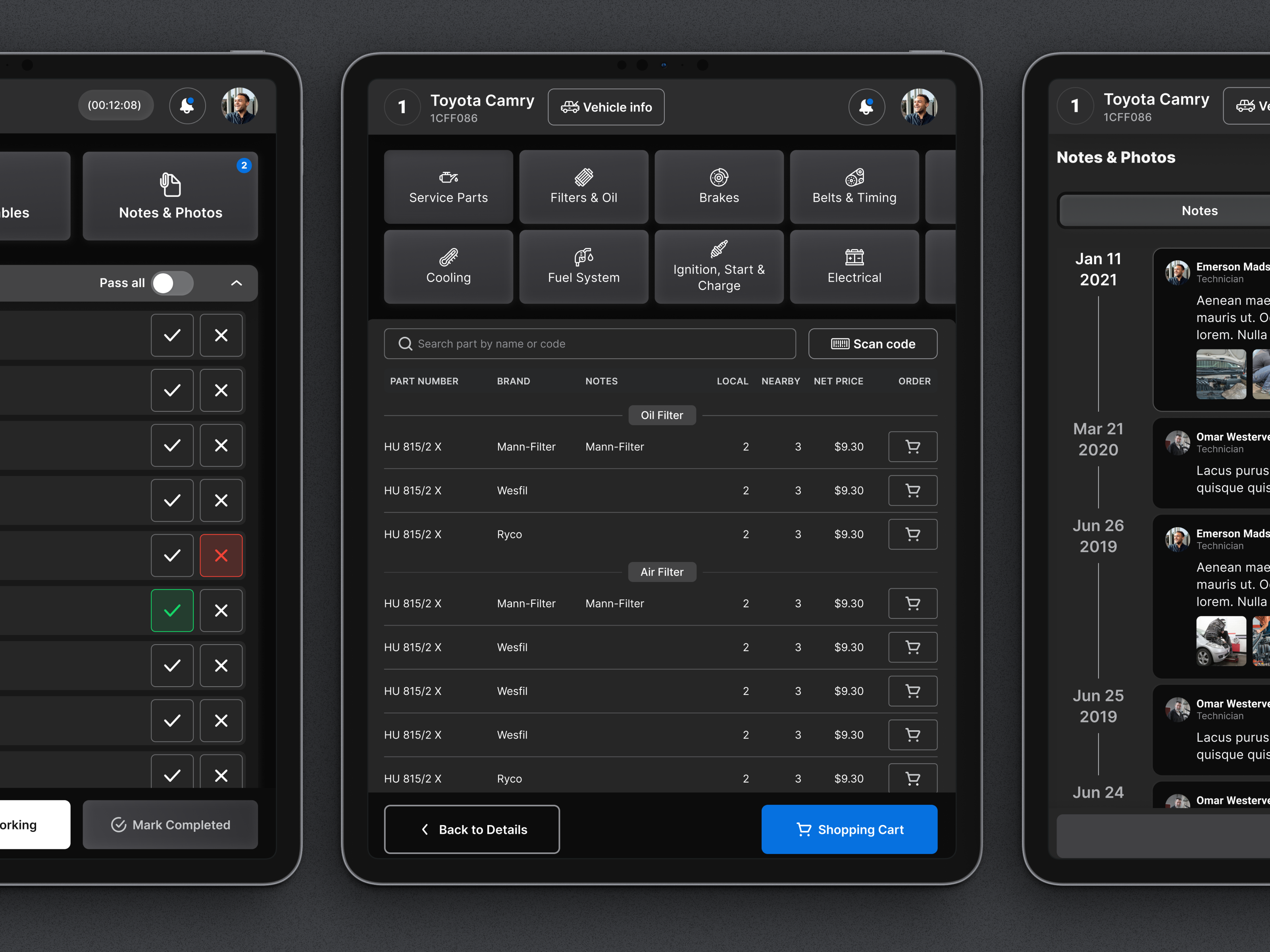
A mechanic can select a part or send the request to a manager without leaving the job. The client reports that this reduced parts ordering from seven minutes to 30 seconds.
Each mechanic enters with an individual PIN, reducing accidental logins and keeping activity connected to the right person.

Mechanics and managers can see whether a job is available, in progress or waiting for parts, reducing duplicated work and orders.
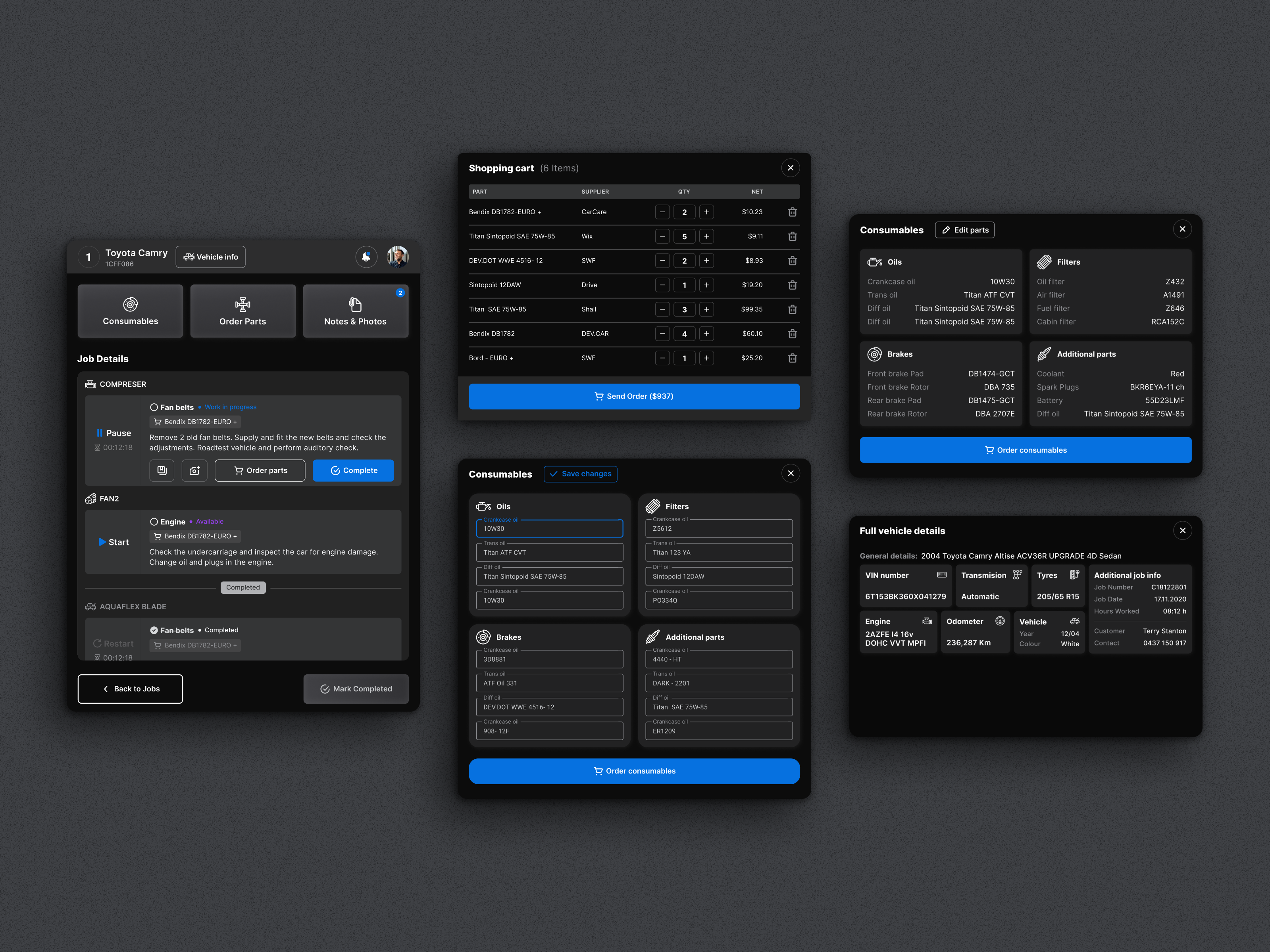
According to the client, the new workflow reduced the time needed to order a part from seven minutes to 30 seconds. Across the workshop, that saved about three hours of staff time each day. The interface also gave mechanics and managers a clearer way to handle jobs, parts and status updates in one place.